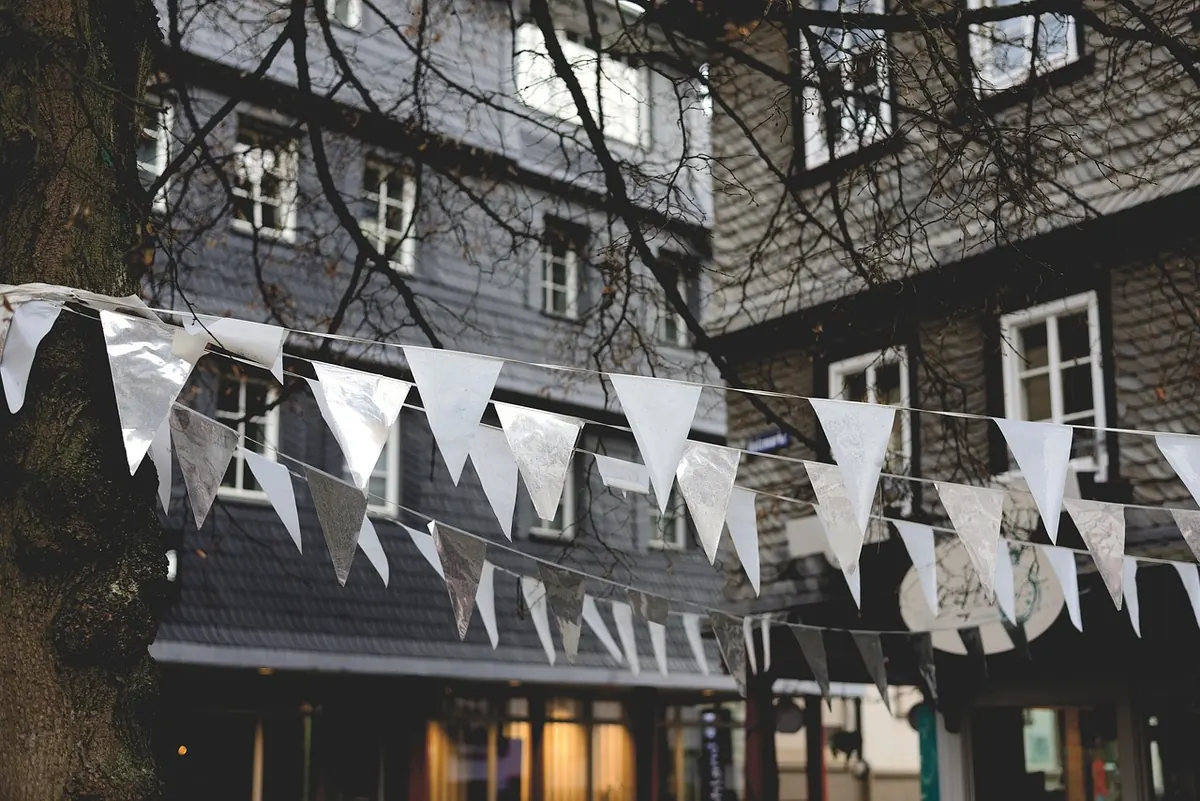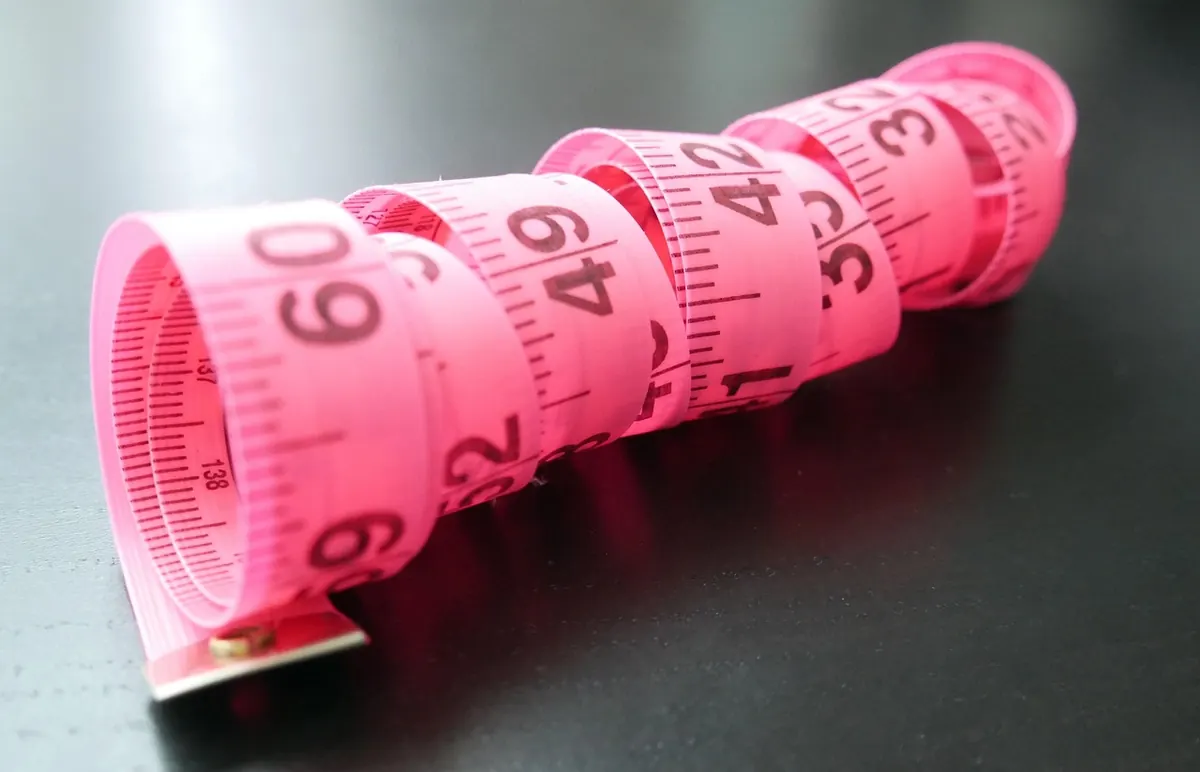
Two metres of bunting sounds generous until it is pinned up and stops a third of the way along the wall. The colour is right, the fabric is lovely, and the run still looks mean. Almost always, the problem is measurements rather than materials. Flag width, drop and spacing control how generous a run feels and how many metres it takes to cross a room. Settle those three numbers first and everything after that — ordering, cutting, sewing, hanging — becomes straightforward.
Bunting is really a repeating unit: a triangle, then a gap, then another triangle. Three measurements define that unit.
Flag width is the distance along the tape on one flag, measured at the top edge. Drop is how far the point hangs below the tape. Spacing is the gap between one flag and the next, measured edge to edge along the tape. Change any one of the three and the whole run changes character — denser, airier, more formal, more playful.
Width is the measurement most people notice first, because it decides whether the bunting reads as a delicate trim or as a bold statement.
A rough guide for a normal room: a four to five metre wall looks well covered with fifteen to twenty flags at 18–20cm wide. If you are dressing a much bigger space, go up a size rather than doubling the count. Small flags at a distance turn into a fuzzy line.
Drop and width work as a pair. A classic pennant cut from a square, folded corner to corner, ends up with a drop roughly equal to its width — a sturdy, friendly triangle. Cut from a longer rectangle and you get a slimmer flag with a drop of one and a quarter to one and a half times the width, which looks more vintage and slightly more formal. Shorter, wider triangles feel modern and block less of what is behind them.
Drop has practical consequences too. Across a doorway, an aisle or a buffet run, keep the lowest point of the flags above head height so guests walk under rather than through them. Above a table, flags should clear seated heads and any candles or lamps. And watch the proportions of the room: long drops on a low ceiling make the ceiling feel lower still, while short drops keep sightlines open and the space feeling light.
Spacing is the setting people adjust least and notice most. The gap is measured from the side edge of one flag to the side edge of the next, along the tape.
Ready-made bunting arrives with the spacing already fixed, so what matters there is the flag count in a given length. If a strand feels too sparse for the space, buy a longer one and gather it as you hang, rather than trying to stretch a short one.
Once you know the repeat, the sum is simple: divide the run by the repeat to get the flag count, then check the total length.
A 4.5m wall, 20cm flags with 15cm gaps, gives a 35cm repeat. Divide 450 by 35 and you get roughly 12.8, so use 12 flags. Twelve flags take 240cm of tape. Eleven gaps take 165cm. That is 405cm, plus 60cm of ties — about 4.65m of tape in total.
Measure the path, not the wall. Bunting rarely hangs in a straight line, and the string knows before the tape measure does.
Swags need more than their straight-line measurement. A gentle dip across a span adds roughly a third; a deep, dramatic curve can add half again. Shape the string into the curve you want, then measure the string. For very long runs, plan a fixing point roughly every metre or so — bunting gains weight once it is strung, and a single hook at each end will sag in the middle.
Read the listing or your pattern and confirm two things: the width of each flag and the drop. Those two numbers tell you the look, and the flag count tells you the length. If you are sewing, cut a couple of test flags first and pin them to the tape at your intended spacing — a metre of sample is faster than unpicking five metres of finished bunting. Allow a little extra fabric for the inevitable odd-shaped offcut, and check that a long run comes from the same dye lot so the colour stays even end to end. Do that, and the bunting will cross the room exactly as you pictured it.
Photo: marshmallowpanda / Pixabay