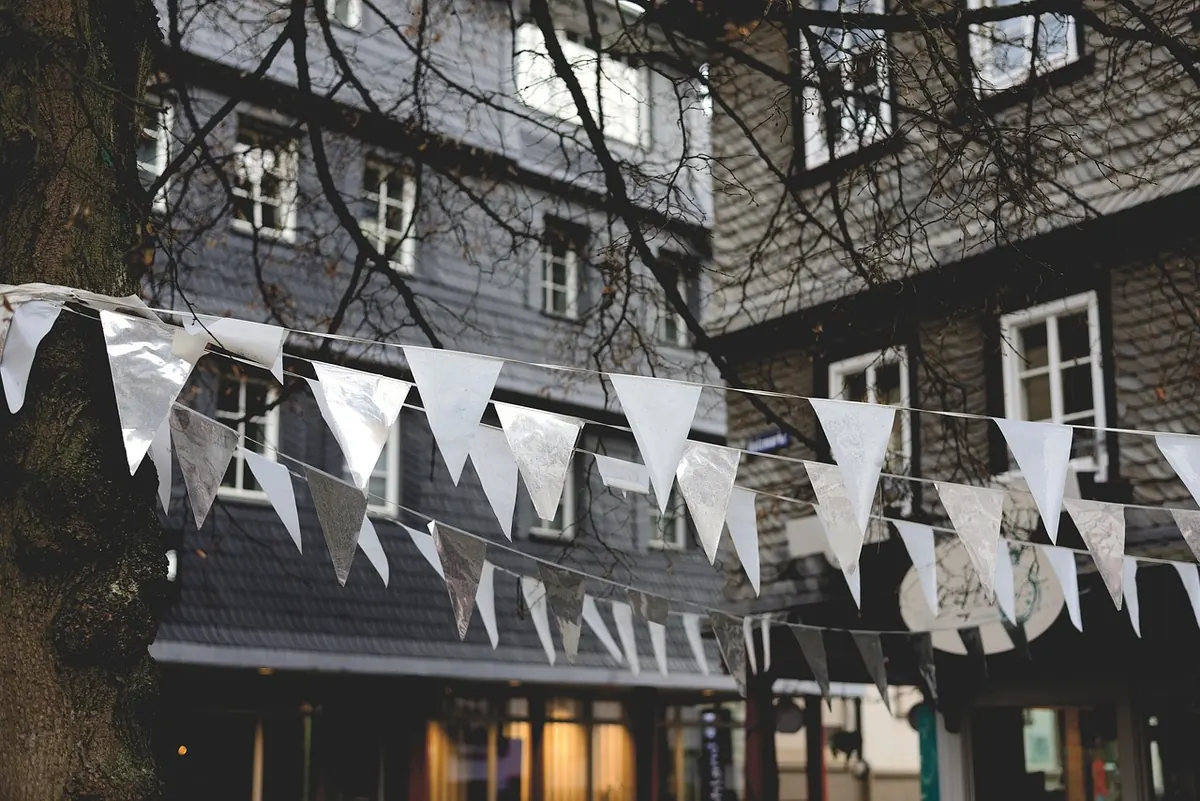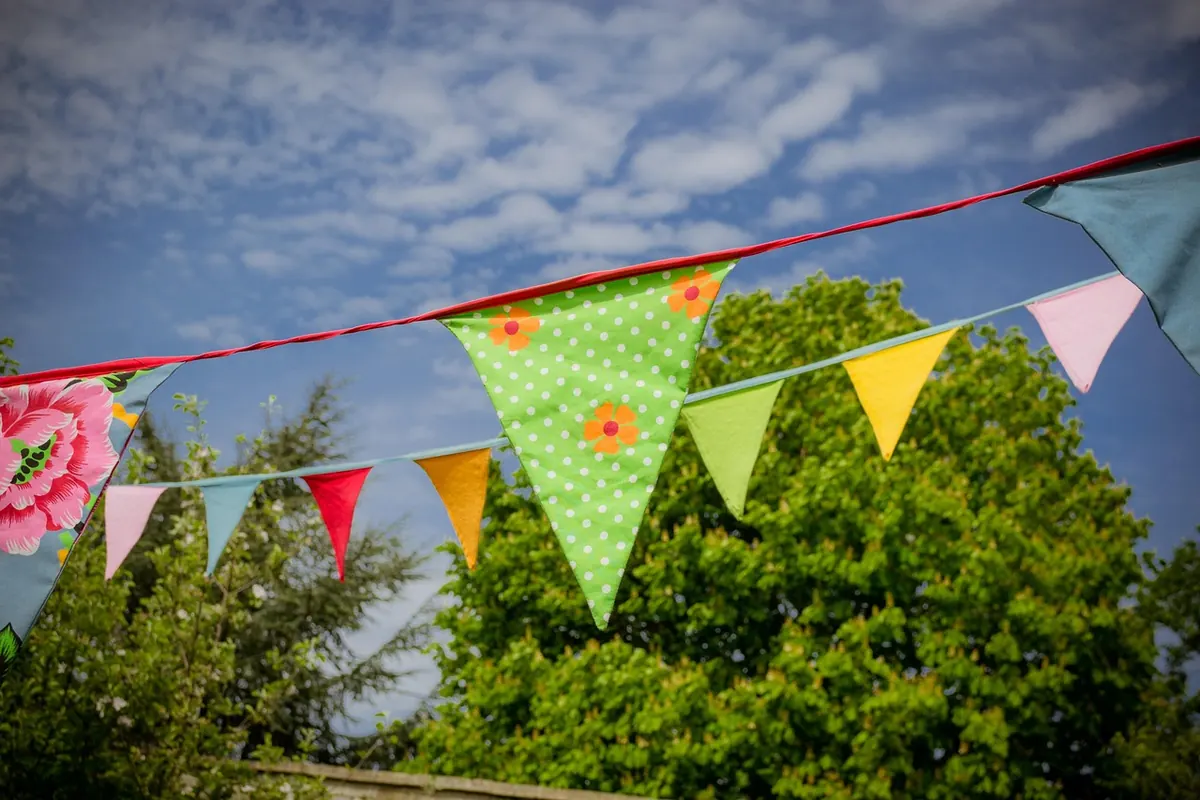
Bunting is one of the quickest ways to make a garden, courtyard, or marquee feel like a party. It is also one of the quickest things to end up in a tangled heap when the weather turns. A little planning before the first length goes up saves you from sagging lines, snapped ties, and damp fabric that smells like a shed by Monday. Use this checklist to work through weather, anchoring, and pack-away while there is still time to adjust.
Start with a proper forecast, not just the icon on your phone. Look at wind speed and direction for the whole party window, including setup and takedown. Gusts matter more than averages: a steady breeze is manageable, but strong gusts will turn a long bunting line into a sail. Rain is easier to plan for, though heavy showers can soak fabric and make ties slippery. Strong sun matters too; it fades cheap dye and makes plastic flags brittle over a long afternoon.
Walk the space at the same time of day as the party. Notice where wind funnels between buildings, where sprinklers hit, and where guests will walk. Bunting hung at head height across a main route is an accident waiting to happen; aim for above roughly 2.1 m (7 ft) over walkways, or run it along a fence instead. Check that trees are not dropping sap or fruit, and that a pergola beam or washing line post is genuinely fixed, not just resting in a bracket.
Not all bunting belongs outside. Cotton and lightweight paper are fine for a sheltered porch on a still day, but they spot, wilt, and tear. For open gardens and parks, look for waterproof polyester, PVC, nylon, or coated outdoor fabric. Sewn edges, reinforced eyelets, and sturdy twill tape make a bigger difference than fancy patterns. If rain is likely, plastic bunting sheds water but can flap loudly in the wind; fabric bunting looks softer but takes longer to dry.
If you are making your own, choose outdoor fabric, polyester thread, nylon tape, and plastic rings or zip ties rather than metal hooks that can rust. Test a spare flag under a running tap and leave it outside overnight before committing the whole set. A few minutes of testing now beats a sodden, streaky mess on the day.
Good anchoring is about spreading the load, not pulling everything as tight as possible. Decide where each end and midpoint will attach before you carry out the ladder. Use wall hooks fixed into masonry or timber, fence posts, sturdy tree trunks with wide straps, gazebo frames, or weighted bases designed for the job. Never tie to gutters, drainpipes, satellite dishes, or loose fence panels. They may hold for an hour, then give way with a bang.
If you are using a ladder, keep it on firm level ground, avoid overhead power lines, and ask someone to steady it. Bunting is not worth a fall.
Bunting behaves like a sail. The longer the unsupported span, the more it will sag and swing. Break long runs with intermediate anchor points every few metres where possible. Leave a slight droop so rain can run off and wind has less flat surface to grab. A line tighter than a guitar string will snap ties or pull fixings; a line so loose it dips into guests' faces is just as bad.
Use separate tie cords at each end, and finish with a knot that can still be undone after rain, such as a round turn and two half hitches. Zip ties are useful for quick fixes, but reusable velcro straps or bungee cords are gentler on fabric and easier to remove. For temporary poles, angle them slightly into the wind and check them every hour or so.
A bunting line that can move a little is usually safer than one that is rigid.
Decide in advance what you will do if the weather changes. Keep a dry tote bag and a towel near the main tie point. If the wind picks up, watch for fabric cracking, poles leaning, or fixings loosening. Take the bunting down before it takes itself down. If rain starts, lower the line under a marquee or porch, or remove it entirely and switch to indoor decorations.
Take bunting down in daylight if you can. Unclip or untie rather than pulling, which stresses eyelets and stretches tape. Sort dry pieces from damp ones straight away. Lay everything flat or drape it over a clean line to dry completely before storage. Even slight dampness leads to mildew, and mildew is almost impossible to remove once it sets.
Brush off pollen, food crumbs, and spider webs. Spot clean with mild soap and cool water, testing a hidden corner first. Do not wring or tumble dry outdoor bunting. Let it air dry out of direct sun. Store it in a breathable cotton bag or cardboard box rather than a sealed plastic bin, especially if there is any chance of moisture. Wrap lengths around a cardboard tube to prevent tangles, and label the bag with contents and date.
Before putting it away for good, check for missing rings, frayed tape, rusted hooks, and weak seams. Note any repairs needed and fix them before the next event. A five-minute repair now saves a frantic search for replacements later.
Ten minutes before guests arrive, tug each anchor by hand, check every knot, and scan for low loops that could catch hair or trays. Make sure the take-down kit is accessible and that someone knows where the main tie points are. If the forecast shifts, adjust early rather than mid-party. Bunting should look effortless; the effort is in these small checks. Once they are done, step back, pour a drink, and enjoy the space you have made.
Photo: Foxy_ / Pixabay